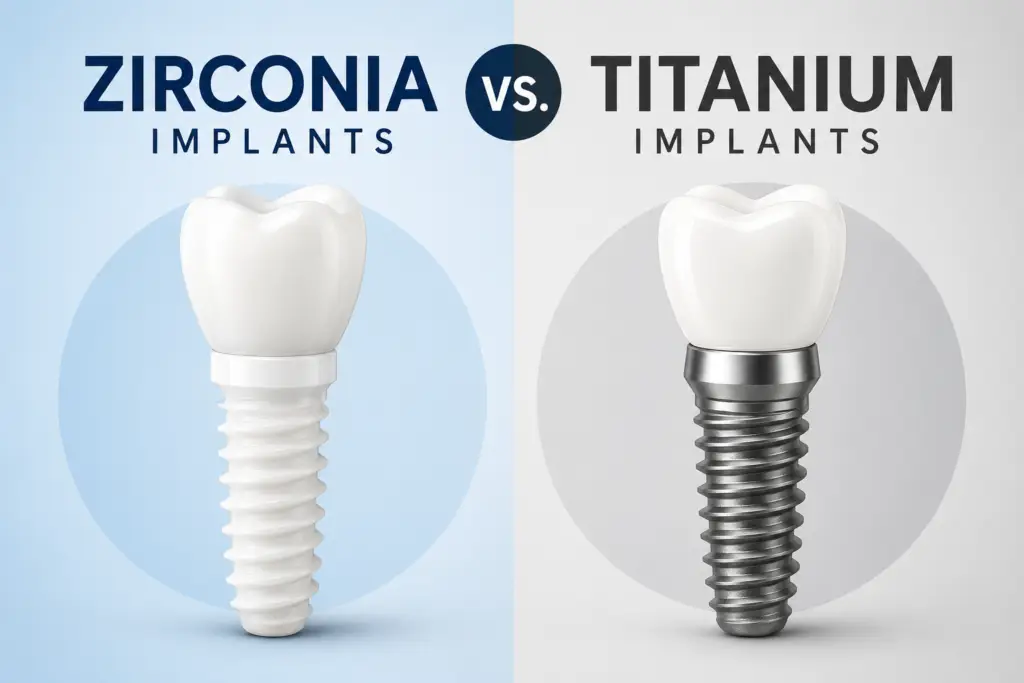
Replacing a missing tooth involves more than choosing the right restoration. The implant post itself, the part placed into the jawbone, plays a major role in how your new tooth looks, feels, and performs over time. For patients in Brandywine, MD, the two most common choices are zirconia and titanium. Each material has a strong track record, but they work differently in the mouth.
Both zirconia and titanium are considered high quality, inert, dental grade materials, and both are widely available from implant manufacturers. The right choice depends on your priorities, from appearance and gum health to budget and long-term durability. A periodontist can help you weigh these factors based on your specific dental situation.
Why Implant Material Matters
A dental implant is made up of three main parts: the implant post, the abutment, and the restoration. The post is the portion surgically placed into the jawbone, where it fuses with bone over time. The restoration is the visible tooth replacement, often a crown. The abutment is a small connecting piece that joins the post and the restoration.
The material used for the post and abutment affects several outcomes. It influences how the implant interacts with gum tissue, how much plaque tends to accumulate around it, how natural the final tooth looks, and how well the implant withstands the forces of chewing. That is why choosing between zirconia and titanium is not purely cosmetic.
Titanium Implants: Strength and Proven Durability
Titanium is a highly durable metal, and that durability gives it a clear advantage in resisting the everyday stress of biting and chewing. For patients who need maximum long-term strength, titanium is often the material of choice. It remains one of the most readily available and widely used materials for dental implants today.
Clinical research on zirconia versus titanium dental implants has reported long-term success rates ranging from 90 to 98 percent. Titanium still leads for long-term strength, and its performance in the mouth has made it a dependable option for a wide range of implant cases.
There is also a financial benefit. Titanium implants typically cost 15 to 30 percent less than zirconia alternatives. For many patients, that lower upfront cost makes titanium the more accessible option while still providing a strong, long-lasting result.
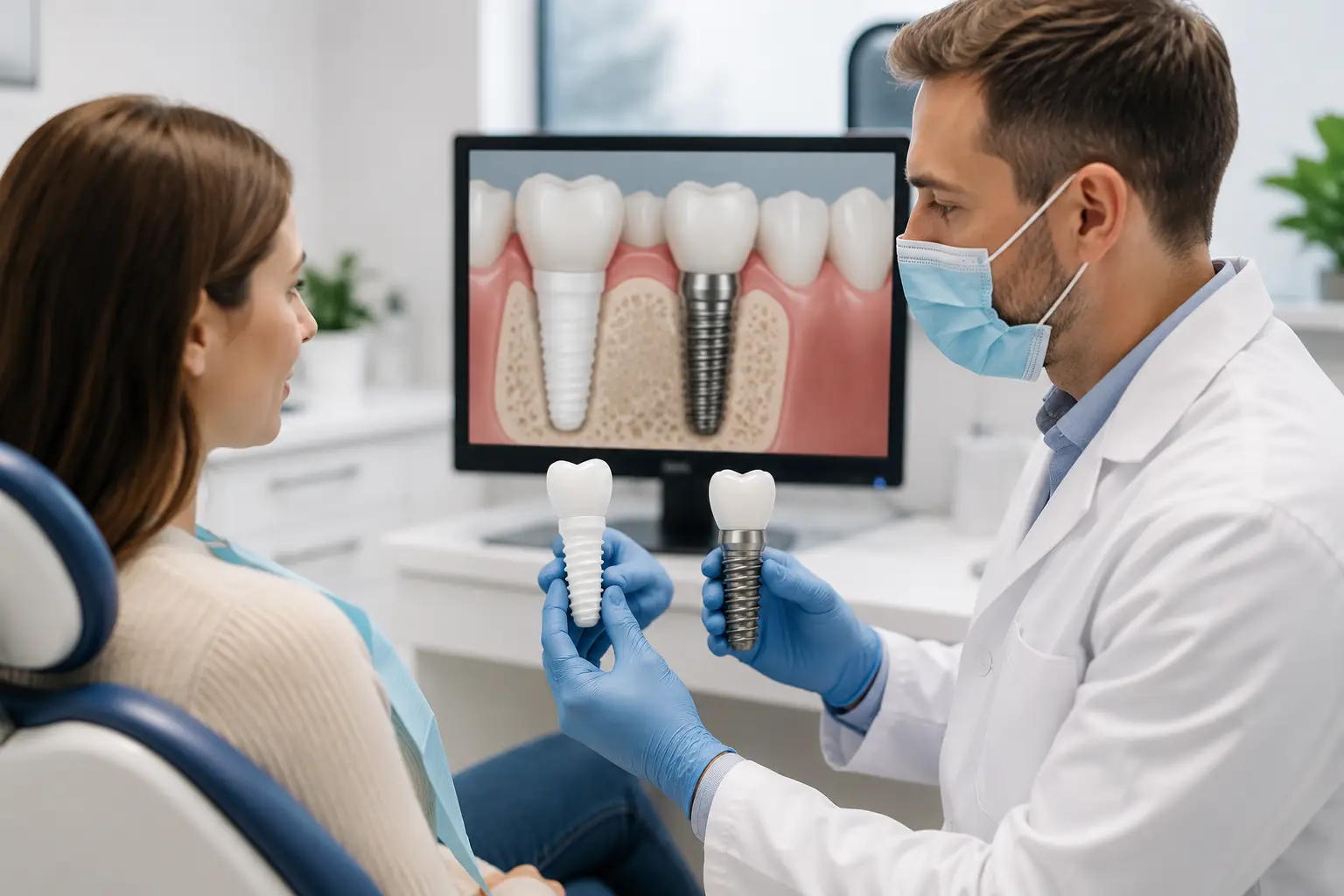
Zirconia Implants: A Metal-Free Alternative with Aesthetic Advantages
Zirconia is a ceramic material that offers a metal-free option for patients who prefer to avoid metals in their body. It has gained popularity because of its appearance and its behavior in the mouth. When it comes to aesthetics, zirconia implants often win over titanium because the white ceramic blends more naturally with surrounding teeth and gum tissue.
Zirconia also performs well in terms of gum health. Research and clinical observation show that zirconia implants tend to accumulate less plaque compared to titanium, and they are often associated with healthier gum responses. For patients with thin gum tissue or high aesthetic expectations, that difference can be meaningful.
There are some trade-offs. Older zirconia implants were considered at risk for micro-fractures, which made some clinicians cautious about using them in high-stress areas. However, modern high-strength zirconia implants are designed to provide similar longevity to titanium, especially when placed by experienced implant specialists.
Cost Considerations: Zirconia vs. Titanium Implants
Cost is an important consideration when comparing dental implant options, but the overall investment can vary significantly from one patient to another. Rather than relying on a standard price, the cost of zirconia or titanium implants depends on the complexity of treatment and the procedures required to achieve a healthy, stable result.
| Material | Cost Consideration | What Can Affect the Cost |
|---|---|---|
| Titanium | Cost can vary depending on the implant system and overall treatment plan | Number of implants, surgical complexity, bone availability, and restoration |
| Zirconia | Cost may vary based on the implant system, materials, and treatment requirements | Implant design, number of implants, surgical needs, and type of restoration |
The total cost of treatment is determined after evaluating your individual oral health, the number of implants needed, available bone, and whether additional procedures such as bone grafting are necessary. Your periodontist can review your treatment needs and explain the options and associated costs during your consultation.
Success Rates, Longevity, and Strength
Both materials have a strong record of success. Clinical studies comparing zirconia and titanium dental implants have found long-term success rates ranging from 90 to 98 percent. That means the majority of implants, regardless of material, remain functional and stable many years after placement.
For raw strength, titanium still holds the edge. It is a highly durable metal that resists fracture, while zirconia has traditionally carried a risk of micro-fractures. That risk has decreased with the development of modern high-strength zirconia, which is designed to deliver longevity similar to titanium.
Placement technique also plays a significant role in implant success. An experienced implant specialist can position the implant correctly, manage the surrounding gum and bone, and select the right material for your anatomy. This is one reason why choosing a skilled periodontist matters as much as choosing the implant material.
Aesthetics and Gum Health: Where Zirconia Shines
For patients who are concerned about the appearance of their smile, zirconia has clear advantages. Because it is white and tooth-colored, a zirconia implant does not show through thin gum tissue the way a gray metal post can. This makes zirconia particularly appealing for front teeth and for patients with a high smile line.
Gum health is another area where zirconia tends to perform well. Studies and clinical reports indicate that zirconia implants are associated with lower plaque buildup compared to titanium. Less plaque around the implant can contribute to healthier surrounding gum tissue and a lower risk of inflammation over time.
That said, titanium implants can also deliver excellent aesthetic results. The final appearance depends heavily on the skill of the clinician, the quality of the restoration, and the condition of the patient’s gum tissue. A periodontist can help you determine whether your gum thickness and smile line make zirconia’s aesthetic advantage worthwhile.
How to Decide Which Implant Is Right for You
There is no single best implant material for every patient. The choice between zirconia and titanium comes down to your priorities. If long-term strength, proven durability, and lower cost matter most, titanium is a strong choice. If you prefer a metal-free option with excellent aesthetics and favorable gum health, zirconia may be the better fit.
Your periodontist will also consider factors like the position of the missing tooth, the condition of your jawbone, your bite forces, and your overall health. A thorough evaluation is the best way to make an informed decision.
Dr. Vivian A. Sorkin provides personalized periodontal care and dental implant placement for patients in Brandywine, MD. During a consultation, she can review your options and recommend the material that best matches your clinical needs and personal goals.
Frequently Asked Questions
Are zirconia implants as strong as titanium implants?
Titanium is a highly durable metal and still holds an advantage in long-term strength. Zirconia implants were once considered at risk for micro-fractures, but modern high-strength zirconia is designed to provide similar longevity to titanium, especially when placed by an experienced implant specialist. The best choice depends on your bite forces and the location of the missing tooth.
Why can zirconia implants cost more than titanium implants?
Zirconia implants may cost more in some cases because they involve specialized materials and manufacturing processes. However, the total cost depends on your individual treatment needs, including the number of implants, bone grafting requirements, surgical complexity, and the type of restoration selected. A periodontist can provide a personalized cost estimate after evaluating your case.
Which implant material is better for gum health?
Zirconia implants often win on gum health and lower plaque buildup compared to titanium. Less plaque accumulation around the implant can help maintain healthier surrounding gum tissue. However, both materials are considered high quality and inert, and the long-term health of your gums also depends on your oral hygiene and regular periodontal maintenance.
What is the healthiest dental implant material?
Both zirconia and titanium are considered high quality, inert, dental grade materials, and both are widely used. Zirconia offers a metal-free option that many patients prefer, and it tends to accumulate less plaque. Titanium has a longer clinical track record and is known for its durability. Your periodontist can help you choose the material that best fits your health history and preferences.
Conclusion
Choosing between zirconia and titanium implants depends on your oral health, aesthetic goals, jawbone condition, bite forces, and individual treatment needs. Both materials offer valuable benefits, and there is no single option that is right for everyone. If you are considering dental implants in Brandywine, MD, a personalized evaluation can help you make the right choice. Dr. Vivian A. Sorkin can discuss your options and recommend an implant solution suited to your needs and long-term goals. Contact Sorkin Perio today to get started.