
Tooth loss can change the way you eat, speak, and smile. It can also make everyday moments feel uncomfortable. The good news is that modern implant dentistry offers several ways to bring back a complete, functional smile. Two widely discussed options are All-on-4 implants and traditional dental implants.
Both approaches use small posts that are placed into the jawbone to hold replacement teeth. But they are not the same treatment. They differ in how many implants are used, how the replacement teeth are attached, and what the overall treatment process looks like. This article explains those differences so you can approach a consultation with your Brandywine periodontist with a clearer sense of what each option involves.
What Is All-on-4?
All-on-4 is a placement technique that uses four implants to support an entire arch of replacement teeth. Instead of restoring teeth one by one, the whole upper or lower arch is attached to a small number of implants. The four implants are positioned strategically so they can carry the weight of a complete set of replacement teeth.
Because the system relies on only four implants per jaw, it is generally considered less invasive than many traditional approaches. Some practices customize the plan and place anywhere from 4 to 6 implants per arch based on the patient’s anatomy, but the principle stays the same. A full arch of teeth is supported by a fraction of the implant count that traditional full-mouth treatment would require.
What Are Traditional Dental Implants?
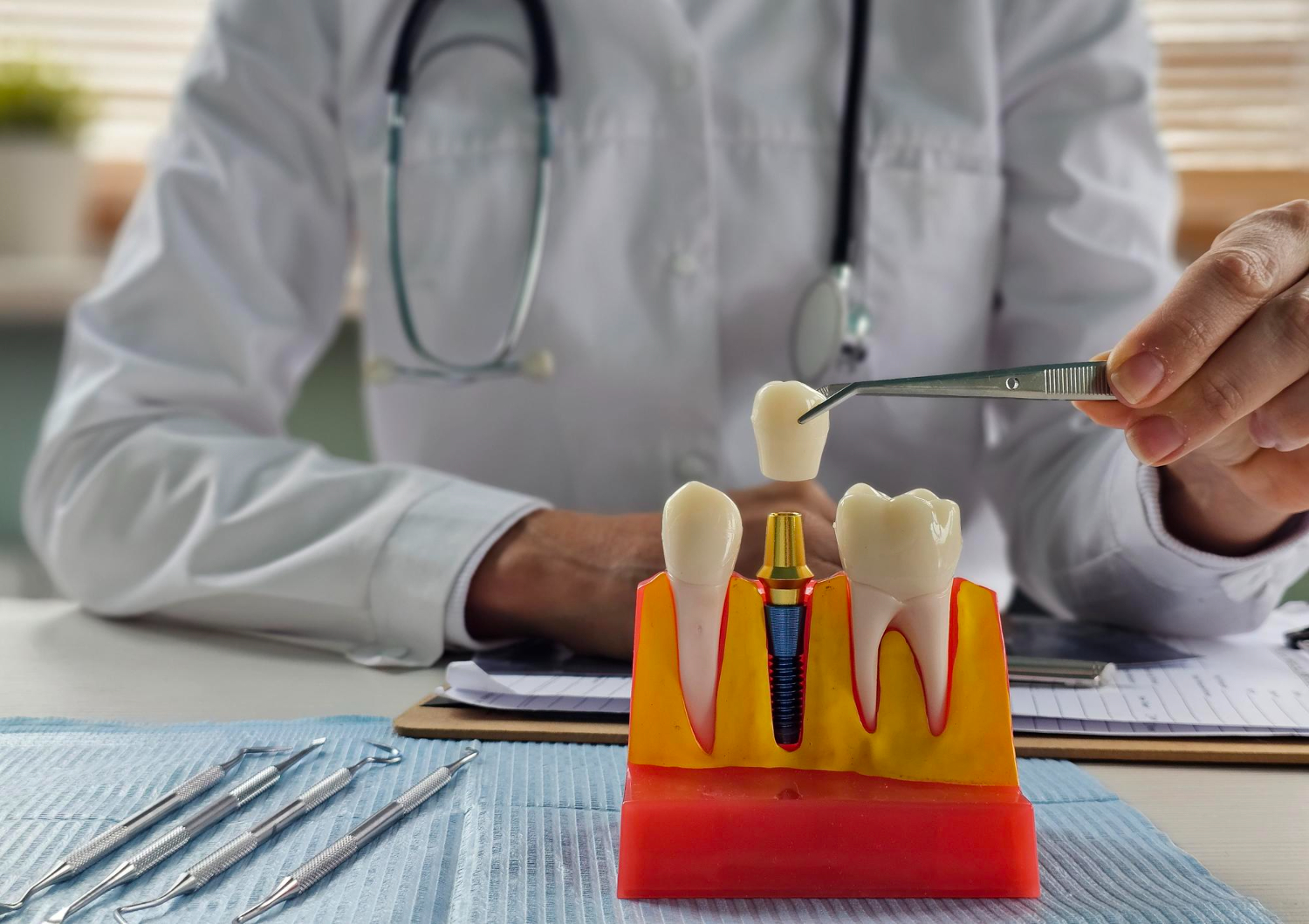
Traditional dental implants follow a different philosophy. In this approach, each missing tooth is replaced with its own implant. A single implant supports a single crown, which means the restoration closely mirrors the natural structure of your original teeth.
This approach offers greater flexibility in tooth restoration. If you lose one tooth, one implant can solve the problem. If you lose several teeth, each one can be restored independently without affecting the others. Traditional implants are especially practical for patients who need to replace just one or a few teeth, rather than an entire arch. However, when a patient needs a full arch of teeth, the traditional method often requires many more implants, which increases both the complexity and the cost of treatment.
Comparing All-on-4 and Traditional Implants
The table below summarizes the main differences between the two approaches.
| Factor | All-on-4 | Traditional Implants |
|---|---|---|
| Number of implants | Four per arch | One per tooth |
| Full-arch support | Entire arch on four implants | Multiple implants for multiple teeth |
| Bone grafting | Often not required | Sometimes required if bone loss is present |
| Invasiveness | Designed to be less invasive | More invasive when many implants are placed |
| Procedure time | Faster | Often longer |
| Cost | Lower because fewer implants are used | Higher for full-arch restoration |
| Flexibility | Full arch as a single unit | Each tooth restored independently |
Bone Grafting and Bone Health
Bone health is a major factor in implant planning. When a tooth is lost, the jawbone in that area can begin to shrink over time. This bone loss can make it harder to place implants securely and can influence which treatment is recommended.
All-on-4 has a distinct advantage in this area. The technique is designed to work with less bone, so bone grafting is often not required. That can make treatment possible for patients who have already experienced significant bone loss. Traditional implants place one implant per tooth, and each implant needs adequate bone support. If bone loss is present, grafting may be needed before the traditional implant can be placed. This adds an extra step and extends the overall treatment timeline.
Procedure Time and Recovery
The number of implants directly affects how long the procedure takes. All-on-4 uses just four implants per arch, so the surgical phase tends to be faster. The approach is designed to be less invasive, which can also contribute to a more comfortable recovery experience.
Traditional implant treatment often requires more implants, especially when several teeth are being replaced. Each implant must be placed individually, which means more time in the chair and more surgical sites to heal. For patients restoring a full arch with traditional implants, the process can be considerably longer from start to finish.
Cost and Value
Cost is an important part of the decision for many patients. Because All-on-4 requires fewer implants, the cost is lowered compared with approaches that use more implants. When you need a full arch of replacement teeth, the difference can be substantial.
Traditional implants, by contrast, are planned per tooth. Replacing an entire arch with one implant per tooth means paying for many more implants. For single-tooth replacement, traditional implants are a highly efficient and cost-effective solution. For full-arch replacement, All-on-4 often provides a more economical path while still delivering a complete set of functional teeth.
Which Option Fits Your Needs?
Your situation determines which approach makes more sense. Patients who are missing all or most of their teeth in one or both jaws are often good candidates for All-on-4. The technique supports a full arch with fewer implants, reduces the need for bone grafting, and shortens the procedure time.
Patients who need to replace one tooth or a few individual teeth may find traditional implants more appropriate. The one-implant-per-tooth model allows each restoration to be planned independently and offers flexibility that All-on-4 does not provide.
The best way to know which option is right for you is to have a thorough evaluation. A periodontist can examine your gums, review your bone structure, and discuss your goals. In Brandywine, Vivian A. Sorkin, D.M.D. provides personalized periodontal care and dental implant treatment, helping patients weigh the benefits of each approach before making a decision.
Frequently Asked Questions
What is the difference between All-on-4 and traditional dental implants?
Traditional dental implants support individual replacement teeth, with one implant placed for every missing tooth. All-on-4 uses four strategically placed implants to support an entire arch of replacement teeth. The essential difference is that All-on-4 restores a complete arch with a small number of implants, while traditional implants replace teeth one at a time.
How many implants are used in All-on-4 treatment?
All-on-4 treatment requires only four implants for each jaw. Some practices customize the approach and place anywhere from 4 to 6 implants per arch depending on the patient’s needs. This remains far fewer than a traditional full-arch restoration, which typically places one implant for each missing tooth.
Is bone grafting needed for All-on-4?
All-on-4 often does not require bone grafting, even when a patient has experienced jawbone loss. Traditional dental implants sometimes require bone grafting if bone loss is present, because each implant needs adequate bone to remain stable. Your periodontist can confirm whether grafting is necessary after a complete evaluation of your oral health.
Is All-on-4 faster than traditional implants?
Yes, All-on-4 is generally faster than traditional implant treatment. The technique places only four implants per arch, so the surgical phase is shorter. Traditional approaches usually involve more implants, which extends the procedure time and the overall treatment schedule from start to finish.
Conclusion
Choosing between All-on-4 and traditional dental implants depends on your number of missing teeth, jawbone health, oral condition, and long-term goals. All-on-4 can be an efficient solution for restoring an entire arch with fewer implants, while traditional implants offer greater flexibility for replacing individual teeth. The right choice should always be based on a personalized evaluation. If you are considering dental implants in Brandywine, schedule a consultation with Vivian A. Sorkin, D.M.D. to discuss your options and find the treatment approach that best fits your smile, comfort, and oral health goals.