Most people who find a sore inside the mouth assume it will clear up on its own, and often it does. The ones that matter are the ones that stay. A lesion that lingers, changes shape, or keeps coming back is a sign that the tissue underneath needs to be looked at directly, and in some cases sampled. A mouth lesion biopsy in Brandywine is a short procedure that answers the one question watching and waiting cannot settle: what is actually happening in that tissue.
The surface of a lesion tells you very little about what is going on beneath it. That gap between appearance and reality is the whole reason biopsies exist, and it is why a stubborn spot in the mouth deserves a professional evaluation rather than another month of hoping.
What Makes a Mouth Lesion Suspicious
An oral biopsy is recommended when abnormalities are detected in the tissues of the mouth, such as sores, lesions, lumps, or growths that do not heal. Not every spot on the gums, tongue, cheek, or palate falls into that category, and many turn out to be harmless. The features that push a lesion into the “worth testing” column are usually about persistence and behavior over time rather than size or discomfort.
Findings that commonly prompt a closer look include:
- A sore, ulcer, or open area that has not healed within a reasonable window
- A lump, thickening, or growth in the soft tissue of the mouth
- A patch or irregular area inside the mouth that will not settle
- A lesion that fades and then returns in the same spot
- Any abnormality your dentist or periodontist flags during a routine exam
Pain is not a reliable guide. Some lesions that need attention cause no discomfort at all, which is exactly why they get ignored for so long. Others are tender from the start and get checked quickly. A lack of pain should never be read as a lack of concern.
The Two-Week Rule for Non-Healing Sores
The most useful guideline a patient can carry out of a dental visit is simple: any sore, lump, or lesion in the mouth that does not heal within two weeks should be evaluated by a dental professional. Two weeks is long enough for ordinary irritation to resolve and short enough that anything persistent gets looked at before it has time to change further.
That rule applies to more than obvious ulcers. A rough patch on the side of the tongue, a white or reddish area on the cheek, or a small bump on the gum that never quite goes away all fall under the same guidance. Persistent lesions may need more than a visual exam, and the only way to know which ones do is to have a clinician look.
Why the Surface Tells You So Little
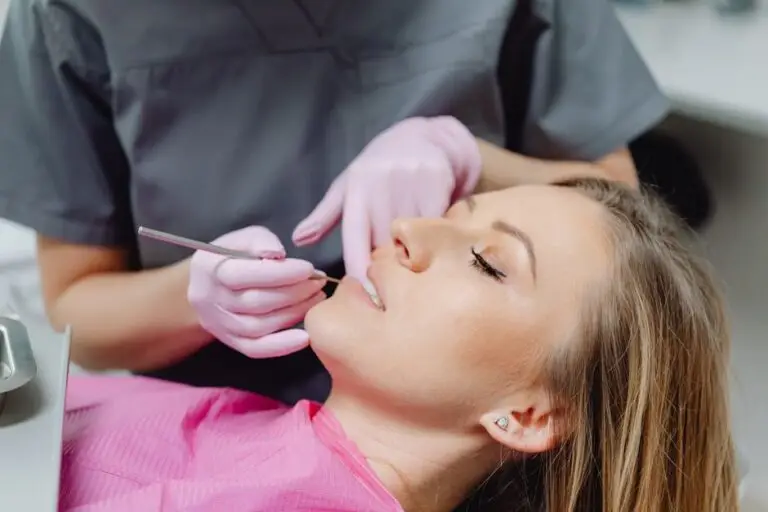
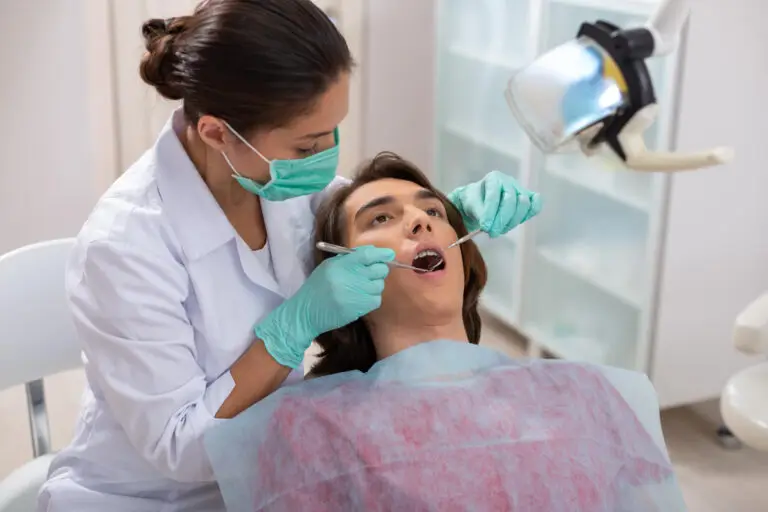
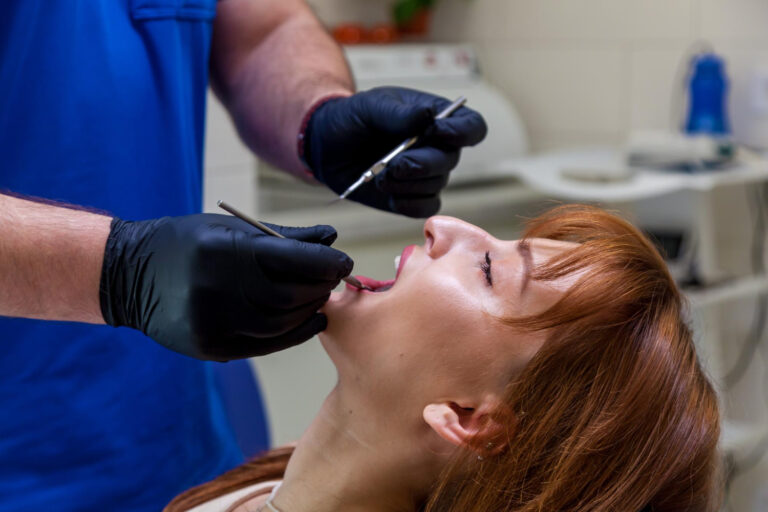
A dentist or periodontist examining a lesion can describe its size, color, texture, and location. What no visual exam can do is identify what the cells are doing underneath that surface. Two lesions that look nearly identical to the eye can turn out to be completely different in nature.
Examining the tissue under a microscope is the only way to know exactly what it is. That is the entire purpose of a biopsy. It is a short, straightforward procedure that turns uncertainty into a clear answer, replacing a guess with a pathology report. For patients, that shift from not knowing to knowing is usually the most valuable part of the process.
What Happens During an Oral Biopsy
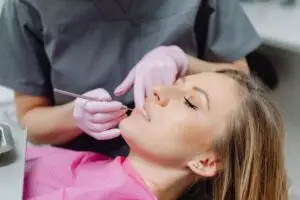
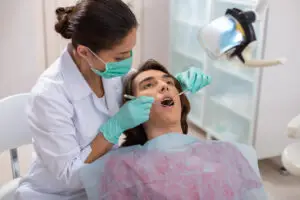
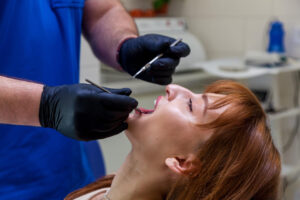
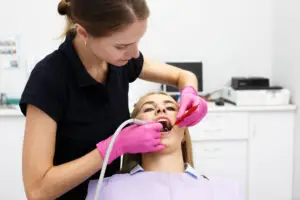
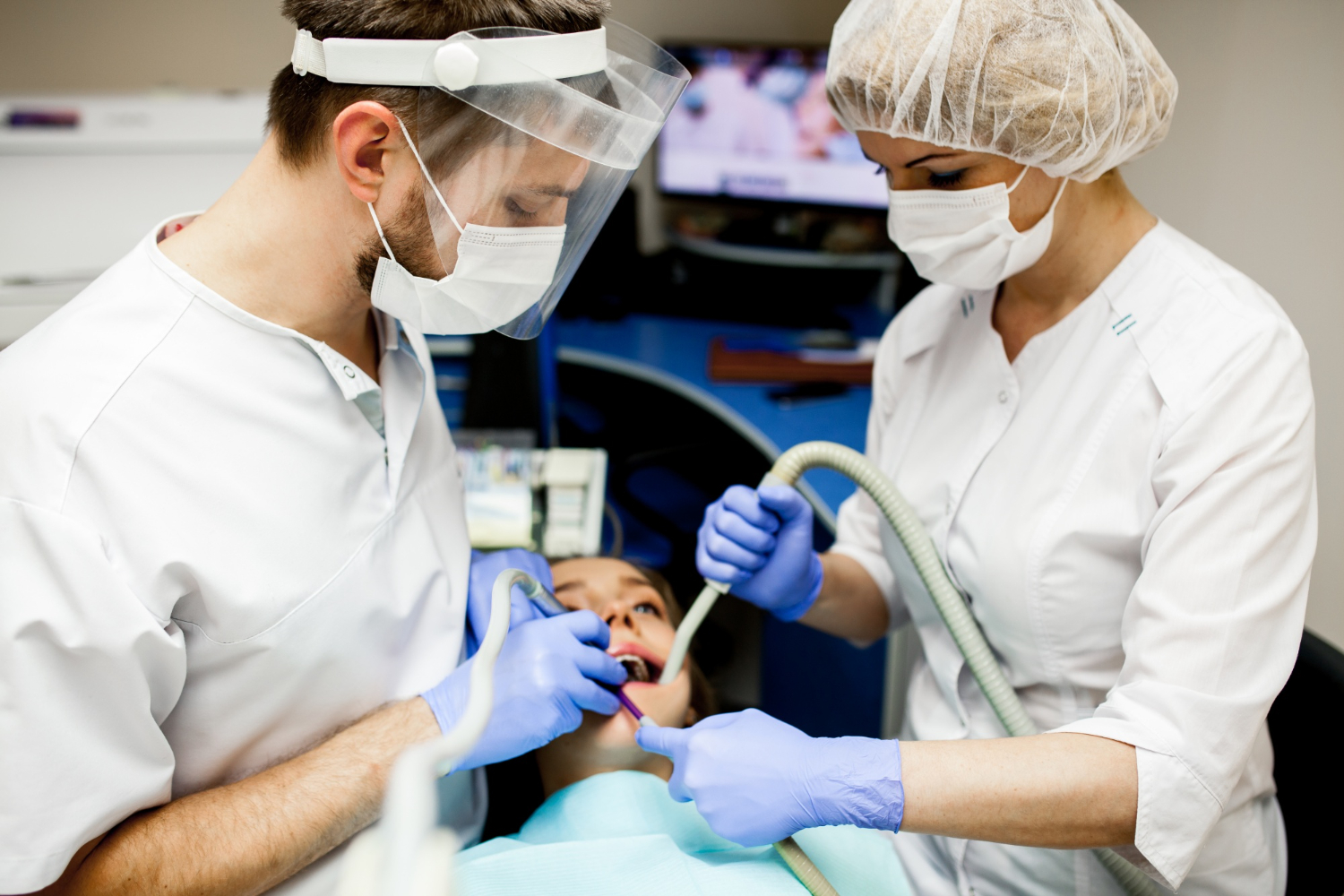
The biopsy itself is typically performed under local anesthesia, so the area is numbed before any tissue is removed. The steps are generally the same from one practice to the next.
- The clinician examines the lesion and confirms the area to be sampled.
- Local anesthesia is administered so the site is comfortable during the procedure.
- A small piece of tissue is removed from the lesion or the area of concern.
- When a suspicious lesion could be a tumor, an orientation suture may be placed in the specimen so the pathologist knows how the tissue was positioned in the mouth.
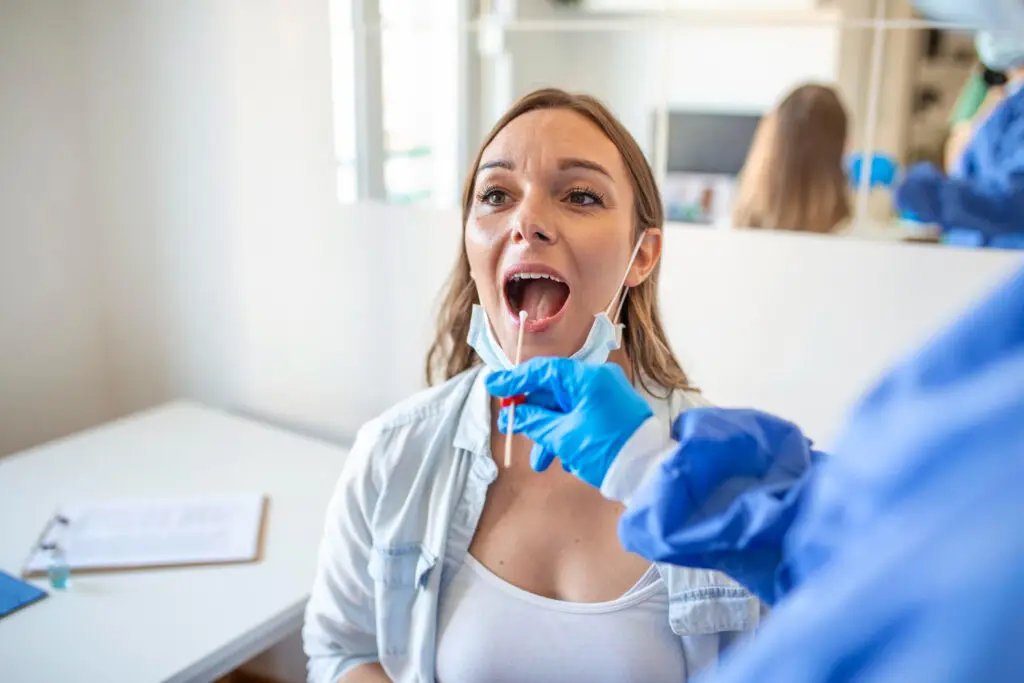
- The sample is sent to a pathology laboratory for microscopic examination.
Because the site is anesthetized, the appointment is generally not a long one. Patients should plan to follow whatever aftercare instructions their clinician provides for the days that follow, since those instructions are tailored to the location and size of the sample taken.
Incisional Punch Biopsy and Other Sampling Approaches
The sample does not always have to be the whole lesion. An incisional biopsy removes a representative portion of the tissue rather than the entire area, and an incisional punch biopsy is a reproducible technique that often provides the diagnostic information needed. That last point matters for patients: a smaller, well-placed sample is frequently all the pathologist requires to reach a conclusion.
Researchers continue to study less invasive ways to gather diagnostic information, including approaches that combine saliva and plasma sampling. Those methods are still being investigated and are not a substitute for tissue sampling when a clinician needs a definitive answer. For now, the tissue itself remains the standard.
Results and Follow-Up
Once the sample reaches the pathology laboratory, it is examined under a microscope and the findings are compiled into a report. Your clinician then reviews that report with you and explains what the tissue showed.
The report is what drives the next conversation. In some cases it confirms that a lesion is benign and can simply be monitored. In others it identifies a condition that needs treatment, and the plan shifts accordingly. Either way, the value of the biopsy is that decisions afterward are based on what the tissue actually is rather than on an educated guess about how it looks.
Where to Get Evaluated in Brandywine
Patients in the Brandywine area have more than one route to an evaluation. A general dentist can perform an oral cancer screening and refer you onward if something needs sampling, and periodontists and oral surgeons in the region also evaluate and biopsy oral lesions. Practices serving Charles County, including Waldorf, La Plata, and Brandywine, along with St. Mary’s County, provide oral pathology services for exactly this kind of concern.
At Sorkin Perio in Brandywine, MD, Vivian A. Sorkin, D.M.D., offers personalized periodontal care that includes gum disease treatment, dental implants, laser therapy, gum grafting, and cosmetic gum recontouring. The practice emphasizes patient comfort and sedation options, and Dr. Sorkin is ACLS certified. For patients who are anxious about having something in their mouth examined or sampled, that combination of comfort focus and advanced safety training matters. The practice publishes a patient guide titled Oral Biopsy in Brandywine, MD: What to Expect, which walks through why a biopsy may be recommended, the procedure, recovery, and results.
If you have a sore, lump, or patch that has been present for more than two weeks, the next step is not to keep watching it. It is to have it looked at by a dental professional who can tell you whether it needs to be sampled or simply monitored. Verify the details of any appointment, coverage, and aftercare directly with the practice you choose.
Frequently Asked Questions
How long should I wait before having a mouth sore checked?
Any sore, lump, or lesion in the mouth that does not heal within two weeks should be evaluated by a dental professional. That two-week window allows ordinary irritation to resolve while making sure anything persistent is examined promptly. Persistent lesions may need further testing beyond a visual exam.
What actually happens during an oral biopsy?
The procedure is typically performed under local anesthesia, so the area is numb. A small piece of tissue is removed from the lesion or area of concern, and in some cases an orientation suture is placed in the specimen. The sample is then sent to a pathology laboratory for microscopic examination.
Does needing a biopsy mean I have cancer?
No. A biopsy is a diagnostic step, not a diagnosis. It is recommended when abnormalities such as sores, lesions, lumps, or growths do not heal, because examining the tissue under a microscope is the only way to know exactly what it is. Many biopsies confirm benign findings.
What is an incisional punch biopsy?
It is a technique that removes a representative portion of the lesion rather than the whole area. An incisional punch biopsy is reproducible and often provides the diagnostic information needed, which means a smaller, well-placed sample frequently gives the pathologist everything required to reach a conclusion.
Who can evaluate a suspicious lesion near Brandywine?
General dentists, periodontists, and oral surgeons all evaluate oral lesions, and practices serving Charles County including Waldorf, La Plata, and Brandywine provide oral pathology services. Sorkin Perio in Brandywine, MD offers periodontal care with sedation options for patients who want a comfortable setting for evaluation.