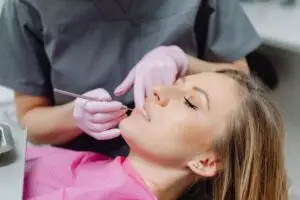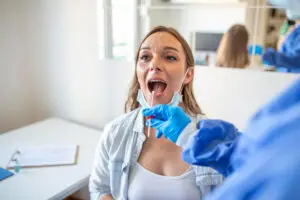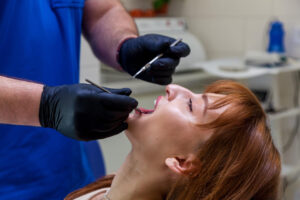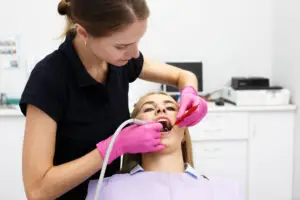
An unexplained sore, lump, or patch inside the mouth is easy to postpone. It may not hurt, it may fade and return, and it is difficult to inspect without a mirror and good lighting. The trouble is that the surface of a lesion tells you very little about the tissue underneath. That gap between what a clinician can see and what is actually happening in the tissue is the reason oral biopsies exist, and it is why a periodontist in Brandywine, MD may recommend one during an otherwise routine visit.
Biopsies of the mouth are performed by clinicians trained in evaluating oral soft tissue and bone, and periodontists are among the providers who do this work. For patients in Brandywine, that means the same specialist who manages gum disease and places implants may also be the person who notices something that needs a closer look and takes the sample that answers the question.
What an Oral Biopsy Actually Answers
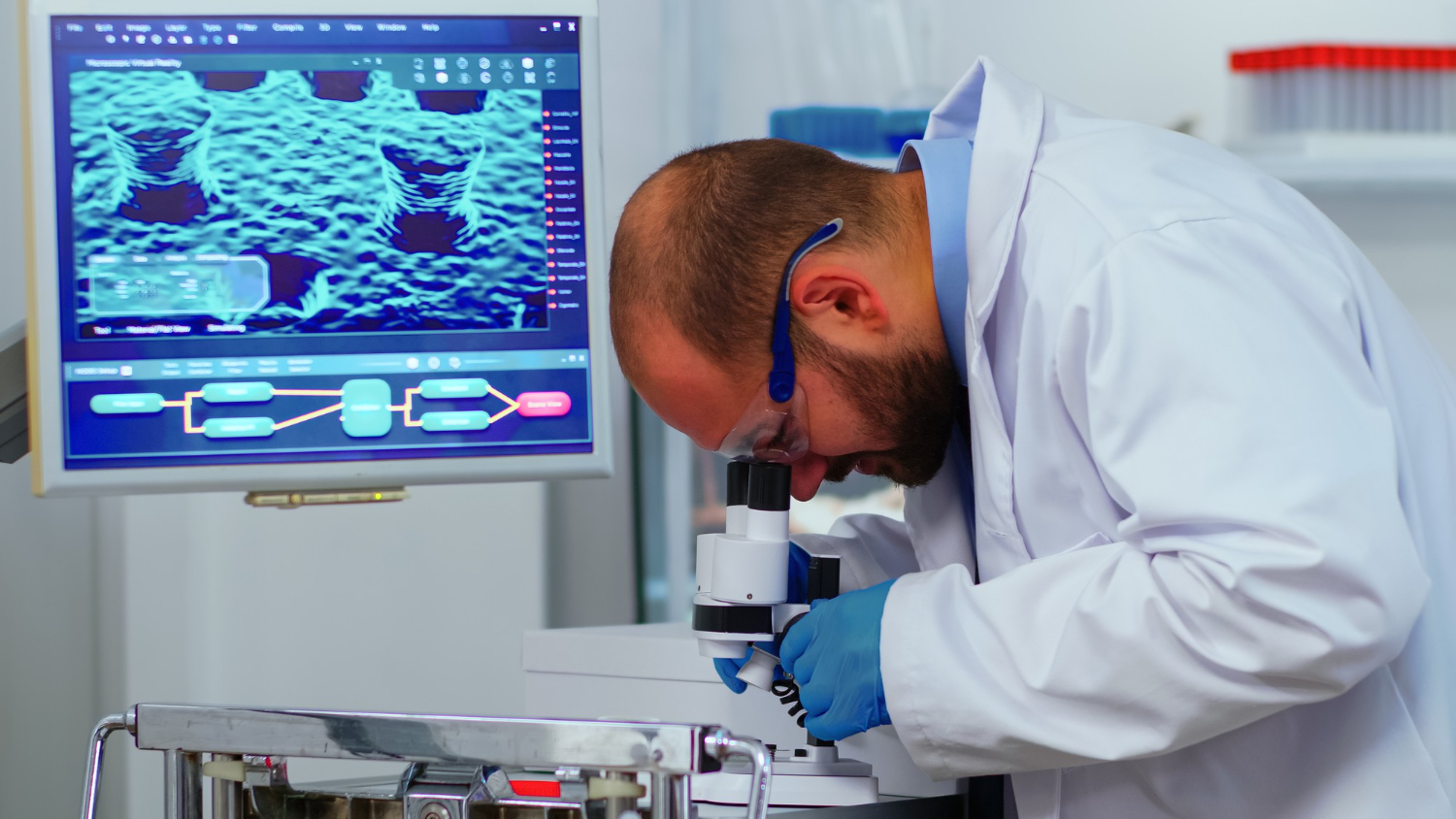
A biopsy is a tissue sample. A small piece of the suspicious area is removed, preserved, and sent to a pathology laboratory, where a pathologist examines it under a microscope and issues a report. That report is the point of the whole exercise. Visual inspection, even by an experienced clinician, cannot confirm what a cell population looks like or whether tissue is benign, inflammatory, or something that requires treatment.
The site’s own patient resource on oral biopsies frames the problem plainly: the surface of a lesion says almost nothing about what is going on beneath it. Two areas that look similar in a mirror can have completely different microscopic identities. One may be a reaction to irritation or a sign of infection. Another may be something that needs prompt attention. A biopsy replaces guesswork with a documented diagnosis.
Why a Periodontist Is Often the One Who Finds It
Periodontal appointments involve time spent examining tissue that other visits may not cover in the same detail. Gum evaluations require looking at the gingiva, the mucosa, the tongue, the floor of the mouth, and the inner cheeks, and they require touching and probing those areas. That kind of hands-on examination is exactly how unusual tissue gets noticed.
Dr. Vivian A. Sorkin, a periodontist in Brandywine, MD, specializes in diagnosing gum disease at every stage, and biopsy and oral cancer screening are part of the services offered at the practice. For a patient who comes in for bleeding gums or a persistent irritation, that combination matters. A soft tissue concern can be identified during the same visit as the gum assessment rather than after months of separate appointments.
Findings That Prompt a Biopsy Recommendation
Not every irregularity in the mouth needs a sample taken. Many resolve on their own or respond to removing the source of irritation. Clinicians tend to watch for features that persist, that do not have an obvious cause, or that behave differently from ordinary healing.
| Finding | Why It Gets Attention |
|---|---|
| A sore that does not heal within a reasonable period | Normal tissue typically repairs itself once the source of trauma or irritation is gone |
| A white, red, or mixed patch on the gums, cheek, or tongue | Color changes can reflect surface keratin, inflammation, or abnormal cell activity that cannot be distinguished by eye |
| A lump, thickening, or area that feels firm on palpation | Changes in texture beneath the surface are not visible in a mirror and require examination |
| A lesion that fades and returns repeatedly | A recurring pattern suggests an underlying process rather than simple mechanical irritation |
| Bleeding or discomfort in an area with no gum disease explanation | When the usual causes are ruled out, unexplained bleeding warrants a closer look |
Patients sometimes assume that pain is the deciding factor. It is not. Many lesions that deserve evaluation are painless, which is one reason they go unnoticed for so long. Discomfort tends to send people to the dentist quickly. A quiet change on the side of the tongue may not be felt at all.
Why Waiting to See If It Goes Away Carries Risk
The watchful approach makes sense in some situations, and a periodontist may recommend exactly that when the cause is obvious, such as a sharp tooth edge or an ill-fitting appliance. The risk appears when a lesion is monitored for months without any change in the factors that might be causing it. Time spent watching is time when a diagnosis is still unknown, and treatment decisions cannot be made on an unknown. That is the practical argument for sampling earlier rather than later when a finding does not behave the way irritated tissue should.
Who Performs Oral Biopsies in the Brandywine Area
Multiple types of providers handle this procedure. Oral surgeons perform biopsies and pathology services, and board-certified oral surgery practices serve Brandywine, MD. Periodontists also perform them, given their training in oral soft tissue and bone. Patients are sometimes referred from a general dentist to a specialist for exactly this reason.
What matters less than the title on the door is the pathway. A sample has to be taken properly, handled correctly, sent to a laboratory, and followed up with a conversation about the result. Whichever clinician takes the biopsy, the patient should leave knowing who will call, when to expect a call, and what the next step looks like if the report requires treatment. If that is not clear at the end of the appointment, it is a fair question to ask before leaving.
What the Appointment Typically Involves
The visit itself is usually shorter than patients expect, and it starts with an examination rather than a needle. The clinician looks at and feels the area, reviews how long it has been present and whether anything changed, and may ask about habits such as smoking, alcohol use, or ill-fitting dental work that could be contributing.
If a biopsy is warranted, the area is numbed before any tissue is removed. A sample is taken and sent for laboratory analysis. The specifics of closure and aftercare depend on the size, depth, and location of the sample, which is why instructions are given individually rather than in a single standard list. Patients who take blood thinners, have other medical conditions, or are managing multiple medications should share that information beforehand, since it can affect how the appointment is planned.
The Pathology Report and What Comes Next
The report is a written description of the tissue, produced by a pathologist who has no stake in what the answer turns out to be. That independence is the value of the process. When the report comes back, the finding determines the next step, which may be nothing further beyond routine monitoring, treatment of an inflammatory or infectious condition, or referral to another specialist for a condition that falls outside periodontal care.
A benign result is not a reason to skip future examinations. It means one question was answered for one area at one point in time. Soft tissue continues to change, and ongoing screening remains part of routine care for patients with a history of oral lesions, tobacco use, or other risk factors.
How This Fits With Gum Disease Treatment
For patients already under periodontal care, screening is not a separate errand. A comprehensive examination for gum disease includes looking at the soft tissues around the teeth and elsewhere in the mouth, so an oral biopsy recommendation often comes out of a visit that was scheduled for something else entirely.
Anyone in Brandywine who has noticed a sore, lump, or patch that has not resolved should have it looked at rather than tracked at home. Scheduling an evaluation is a low-cost way to replace uncertainty with an answer, and it is the same principle that applies to gum disease itself: the earlier something is identified, the more options exist for managing it.
Frequently Asked Questions
Will a periodontist perform an oral biopsy?
Yes, in many cases. Biopsies of the mouth are performed by clinicians trained in evaluating oral soft tissue and bone, and periodontists are included in that group alongside oral surgeons. Whether a specific practice handles the procedure depends on the clinician and the location of the lesion. If a referral is more appropriate, the office will arrange one.
How painful is an oral biopsy?
The area is numbed before tissue is removed, so the sampling itself should not be painful. Afterward, most patients describe soreness at the site that settles as the tissue heals, along with some sensitivity near the area. Any aftercare instructions given by the clinician should be followed closely, and unexpected bleeding or worsening pain should be reported right away.
What percentage of oral biopsies turn out to be cancer?
No single number applies across all practices and all types of lesions, so a statistic found online may have nothing to do with a particular case. The only reliable answer for an individual patient comes from the pathology report on their own tissue sample. That is why the biopsy is taken rather than estimating risk from appearance alone.
Does dental insurance cover an oral biopsy?
Coverage varies by plan, by how the procedure is coded, and by whether the biopsy is treated as a diagnostic service or a surgical one. Patients should confirm benefits directly with their insurance carrier and ask the practice about costs before the appointment. Estimates from a specific plan are the only figures that apply to a specific patient.
How long does it take to get biopsy results?
Turnaround time depends on the laboratory and the type of analysis being performed, so it is best to ask the office directly rather than rely on a general estimate. The practice should tell you who will contact you, by what method, and roughly when to expect news. If that window passes without word, a follow-up call is reasonable.