A recommendation for flap surgery usually arrives after other gum disease treatments have been tried and the disease is still active. Periodontal practices in the Brandywine area describe osseous surgery as a treatment for gum disease that has progressed beyond the surface, the point where regular cleanings are no longer enough. Flap surgery belongs to that same category of care. It is not cosmetic work. The purpose is access, getting below the gumline to clean what cannot be reached from above and to reposition the tissue so it fits the tooth again.
If you are scheduled for flap surgery in Brandywine, MD, or you are deciding whether to go ahead with it, the useful questions are practical ones. What happens during the appointment? How much discomfort should you plan for? Who gives you instructions afterward, and what do you do if something feels wrong? Here is a clear look at the procedure and the decisions around it.
What Flap Surgery Is
A flap, in surgical terms, is tissue that is lifted or moved so a clinician can reach an area that is otherwise covered. In periodontal treatment, that means the gum tissue is separated from the tooth and from the bone beneath it. Once the tissue is out of the way, the periodontist can see and reach the root surfaces and the bone that supports the teeth directly.
After the area has been cleaned and any necessary reshaping has been done, the tissue is placed back against the tooth. Healing then takes place along the new gum margin. Because the tissue already belongs to you, it can sit against the tooth more tightly than it did before, which is the whole point of the procedure when pockets have become deep.
Why Deep Cleaning Is Sometimes Not Enough
Scaling and root planing removes deposits from root surfaces, and it works well while pockets are shallow enough for instruments to reach the full depth of the space around each tooth. When gum disease has progressed beyond the surface, reach becomes the problem. Pockets deepen, the space between the gum and the tooth fills with bacteria and hardened deposits, and the tissue sits against the tooth in a way that traps more of the same material.
Flap surgery addresses the mechanics of that problem rather than just the surface deposits. Lifting the tissue allows a full cleaning of the root, a direct look at the bone contour, and a chance to place the gum back where it has a better chance of staying healthy. That is why it tends to be recommended for advanced disease rather than as a first step.
What Happens During the Appointment
The experience of the appointment varies with how many teeth are involved and how much bone reshaping is needed. What stays consistent is the sequence of events around it. A few things are worth knowing in advance:
- The area is numbed before treatment begins, so the procedure itself is not painful. Sedation options are available at the practice for patients who want more comfort during periodontal treatment.
- Expect pressure and movement rather than sharp pain. Your periodontist will check in with you during the appointment if you need a break.
- Length depends on the number of teeth treated. Ask the office for a realistic estimate for your case so you can plan your day.
- If sedation is part of your plan, ask what the office requires for a ride home and for the rest of the day.
- You will leave with written instructions covering what to eat, how to clean the area, and which medications to take.
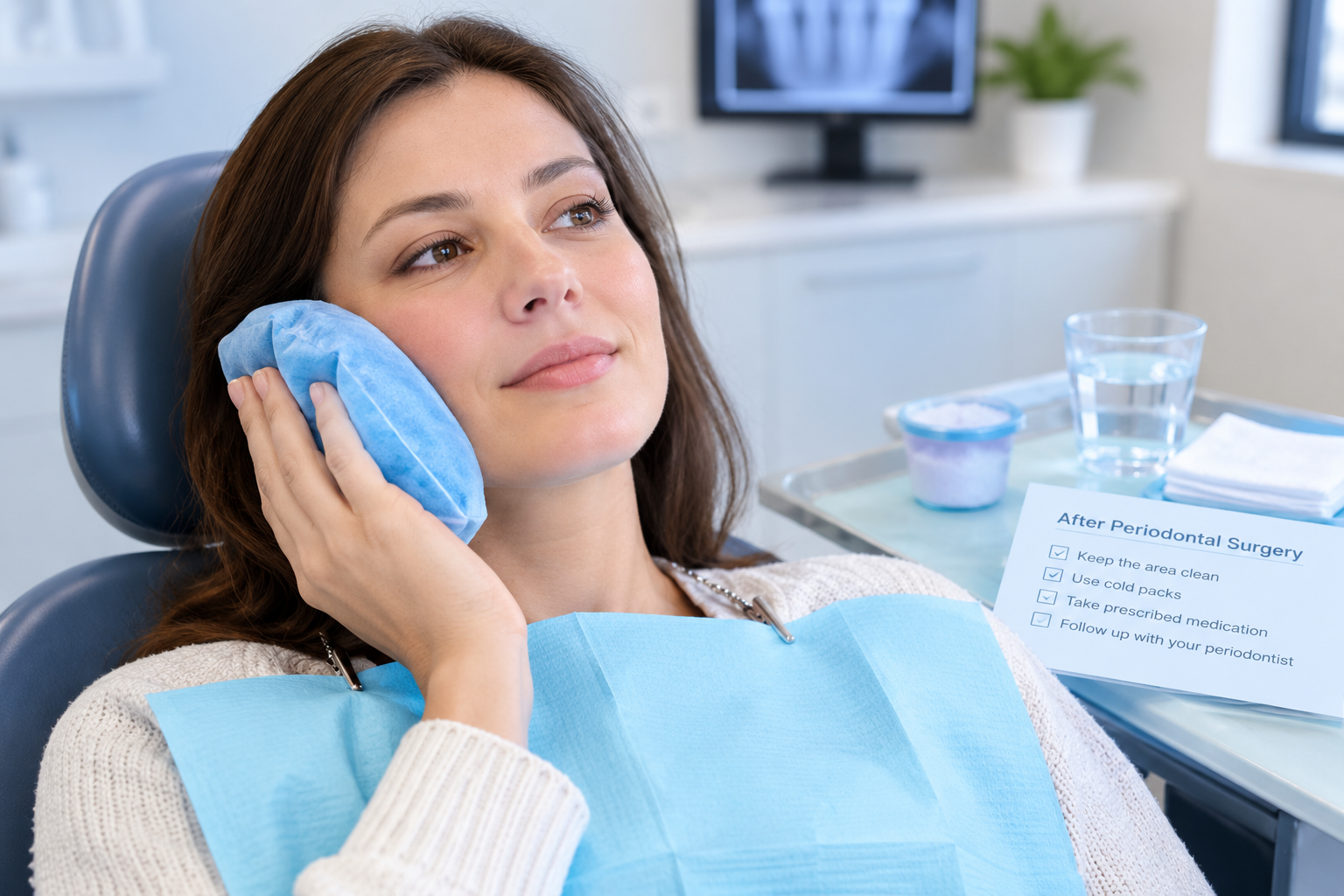
Recovery Questions Worth Asking Before Treatment Day
Recovery differs from patient to patient, and the practice that treats you is the only reliable source for what your own recovery should look like. Before the appointment, get answers to these questions so you are not guessing afterward:
- What can I eat and drink on the first day, and when can I return to my normal diet?
- How should I brush and floss around the treated area, and how long should I avoid the area?
- Which medications should I take, and which ones should I avoid?
- Is swelling expected, and what should I do about it?
- When can I exercise again, and does smoking affect healing?
- When is my follow-up visit, and who do I call after hours if something concerns me?
Write the answers down or ask the office for them in writing. Details that seem obvious in the chair are easy to forget once you are home.
How Flap Surgery Compares With Other Gum Disease Treatments
Periodontal care is rarely one procedure. It is a sequence, and flap surgery is one step in that sequence rather than a replacement for everything else. The table below shows how the main options relate to each other in general terms.
| Treatment | What it generally addresses |
|---|---|
| Scaling and root planing | Non-surgical cleaning of root surfaces to remove deposits and bacterial buildup |
| Laser therapy | Used as part of gum disease treatment, including Fotona laser therapy |
| Flap surgery | Access to roots and bone when disease has progressed beyond the surface |
| Gum grafting | Replacing gum tissue that has been lost |
| Cosmetic gum recontouring | Reshaping the gum line for appearance |
Your periodontist decides which combination fits your mouth based on an examination, probing depths, and imaging. Two patients with the same diagnosis may end up with different plans, and that is normal.
Cost, Insurance, and Paperwork
There is no single price for flap surgery, and it would be misleading to quote one. The number of teeth treated, whether bone reshaping or grafting is added, and what your dental plan covers all change the final figure. Ask for a written estimate before the appointment, ask what happens financially if additional treatment is needed mid-procedure, and ask the office to verify your benefits in advance.
Records matter after treatment as well. Dental surveillance programs track whether a patient has had a flap procedure and the date it was performed, which shows how relevant that history is to your ongoing care. Keep your procedure details and pass them along to any dentist or specialist you see later.
Choosing a Periodontist in Brandywine, MD
Flap surgery is performed by a periodontist, a dentist who specializes in the gums and the bone that supports teeth. Dr. Vivian A. Sorkin, D.M.D., is a female periodontist in Brandywine, MD, whose practice focuses on personalized periodontal care, including gum disease treatment, dental implants, laser therapy, gum grafting, and cosmetic gum recontouring. The practice emphasizes patient comfort, offers sedation options, and maintains advanced safety standards, including ACLS certification.
When you meet with a periodontist about flap surgery, ask how many of these procedures they perform, how they decide between surgical and non-surgical options, which sedation choices they offer, and what follow-up care looks like after treatment. The answers should be specific to your mouth rather than general.
Frequently Asked Questions
Is flap surgery a major surgery?
It is a surgical procedure, but it is performed in the mouth and is usually handled in a periodontal office rather than a hospital setting. Gum disease that has progressed beyond the surface is the typical reason it is recommended. Your periodontist can tell you how involved your own case is, how many teeth are affected, and what sedation options are available.
How is flap surgery different from a deep cleaning?
A deep cleaning removes deposits from root surfaces with instruments that work below the gumline while the tissue stays in place. Flap surgery lifts the tissue so the roots and bone can be seen and treated directly. It is generally recommended when regular cleanings are no longer enough to control the disease.
Does flap surgery hurt?
The area is numbed, so the procedure itself is typically not painful. Sedation options are available for patients who want additional comfort, and this practice places a strong emphasis on a calm experience. Soreness, tenderness, and sensitivity afterward are common for a period, and your periodontist will give you instructions for managing them.
Will my gums grow back after flap surgery?
Gum tissue does not regrow on its own once periodontal disease has destroyed it. Flap surgery is not designed to add gum tissue back. It is designed to remove the source of infection and place existing tissue so it fits the tooth more tightly. Replacing lost gum tissue for coverage or appearance is usually a separate discussion about grafting.
How do I know if I need flap surgery?
The recommendation comes from an examination, probing depths, and imaging rather than from symptoms alone, since advanced gum disease can be quiet. It usually enters the conversation when disease has progressed beyond the surface and regular cleanings are not enough. If it has been suggested to you, ask which teeth are involved, what the alternatives are, and what happens if you wait.